
400+ 5 Star Reviews 

Your car’s paint does more than make it look good. It acts as the first line of defense against UV rays, road debris, bird droppings, tree sap, and the kind of daily wear that quietly chips away at your vehicle’s value. Once that clear coat starts to fade or chip, it is not just cosmetic. It signals deferred maintenance to buyers and can lead to costly repairs down the road.
The problem is that the market is full of products all promising the best auto paint protection, and it can be genuinely difficult to know what you are actually buying. Wax, sealant, ceramic coating, and paint protection film (PPF)—they all protect your paint, but they work in completely different ways and serve very different purposes.
This guide breaks down each option clearly, compares them side by side, and helps you figure out what is right for your car, your driving habits, and your budget. If you are a car owner in the Clovis or Fresno area, there are also some local considerations worth knowing about.
What Are You Actually Trying to Protect Against?
Before comparing products, it helps to identify the main threats to your car’s paint. Different problems require different types of protection, and knowing the risks makes choosing the right solution much easier.
Physical damage such as rock chips, road debris, and minor abrasions requires a protective layer thick enough to absorb impact. Paint protection film (PPF) is the only option designed to provide this type of physical barrier.
Environmental and chemical damage includes UV exposure, bird droppings, acid rain, tree sap, and oxidation. These contaminants slowly degrade your clear coat over time. Ceramic coatings excel here by offering strong chemical resistance and UV protection.
Basic shine and light protection can be handled with paint sealants or wax, which are affordable, easy to apply, and simple to maintain.
For high-value vehicles or cars driven frequently, the most effective approach is often a combination: PPF on high-impact areas and a ceramic coating across the rest of the vehicle.
Understanding your main risks helps you avoid spending money on protection that was never designed to solve your problem.
The 4 Types of Car Paint Protection
Paint Protection Film (PPF)
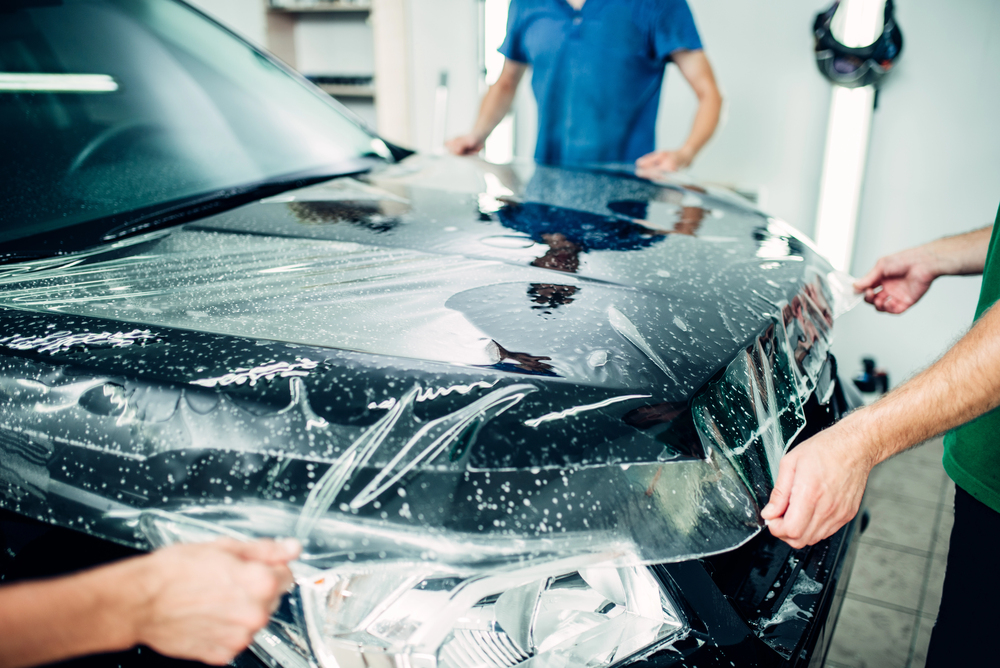
Paint protection film is the most physically durable option available. It is a thick, clear thermoplastic urethane (TPU) film applied directly to the painted surface, creating a barrier that protects the paint from rock chips, road debris, and minor abrasions.
Most modern PPF measures about 8 to 10 mil thick, allowing it to absorb impacts that coatings or wax cannot. Many premium films also feature self-healing technology, where light scratches disappear when exposed to heat from sunlight or warm water.
High-quality PPF can also block UV and infrared radiation, helping prevent paint fading and oxidation while remaining virtually invisible once installed.
Best for: Highway-driven vehicles, high-value cars, front bumpers, hoods, and other high-impact areas
Durability: 8 to 10 years with proper care
Limitations: Does not significantly enhance gloss or hydrophobic properties and is the most expensive option.
Ceramic Coating
Ceramic coating is a liquid polymer made primarily from silicon dioxide (SiO₂) that chemically bonds with your car’s clear coat. Once cured, it forms a durable, glass-like layer that protects the paint from environmental contaminants.
This coating creates a hydrophobic surface that repels water, dirt, and chemicals while enhancing gloss and making the car easier to clean. It also provides strong resistance to UV damage, oxidation, and staining.
Professional application usually involves thorough washing, decontamination, and paint correction to ensure the coating bonds properly and delivers long-lasting results.
Best for: Daily drivers needing long-term protection from UV rays, contaminants, and weather
Durability: 2 to 7 years depending on the product and maintenance
Limitations: Does not protect against rock chips or physical impact.
Paint Sealant
Paint sealants are synthetic polymer protectants that bond to the clear coat and create a smooth, protective layer with a glossy finish. They offer longer-lasting protection than traditional wax and are relatively simple to apply.
Sealants provide moderate protection against UV exposure, oxidation, and environmental contaminants, making them a practical choice for drivers who prefer DIY maintenance.
Best for: Budget-conscious owners or drivers who enjoy maintaining their vehicles themselves
Durability: 4 to 6 months on average, sometimes up to 12 months
Limitations: Does not protect against rock chips and lacks the long-term durability of ceramic coatings.
Carnauba Wax
Carnauba wax is the traditional paint protection option, derived from the leaves of a Brazilian palm tree. It produces a warm, deep shine that many car enthusiasts prefer for its classic look.
Unlike coatings or sealants, wax sits on top of the paint rather than bonding to it, which gives it its signature glow but also makes it the least durable protection option.
Best for: Classic cars, show vehicles, or drivers who enjoy regular hand detailing
Durability: 4 to 8 weeks for natural carnauba; up to 3 months for synthetic blends
Limitations: Provides minimal protection and requires frequent reapplication.
Side-by-Side Comparison: Which Is the Best Automotive Paint Protection for You?
Each option sits at a different point on the paint protection spectrum. Here is how they compare.
Paint Protection Film (PPF)
- Best for: Physical protection from rock chips and road debris
- Durability: 8 to 10 years
- Cost: About $900 to $5,000+, depending on coverage
- Strengths: Excellent impact resistance; protects high-impact areas like the hood, bumper, and fenders
- Hydrophobic performance: Moderate
- Gloss enhancement: Minimal
- Installation: Professional installation required
Ceramic Coating
- Best for: Long-term UV protection, gloss, and easy maintenance
- Durability: 2 to 7 years
- Cost: Typically $800 to $2,500 professionally installed
- Strengths: Strong UV resistance, excellent hydrophobic properties, deep gloss finish
- Physical protection: Does not prevent rock chips or impact damage
- Installation: DIY kits exist, but professional application is recommended
Paint Sealant
- Best for: Affordable protection with simple DIY application
- Durability: 4 to 12 months
- Cost: About $20 to $150
- Strengths: Good hydrophobic properties and moderate UV protection
- Physical protection: None
- Installation: Easy to apply and maintain at home
Carnauba Wax
- Best for: Classic shine and enthusiast detailing
- Durability: 4 to 8 weeks (up to 3 months for synthetic blends)
- Cost: About $15 to $80
- Strengths: Warm, deep gloss that many enthusiasts prefer
- UV protection: Low
- Physical protection: None
- Installation: Most DIY-friendly option
How to Choose
The right option ultimately depends on your priorities and how you use your vehicle. If your main concern is protection from rock chips and road debris, paint protection film (PPF) is the best choice. If you want long-lasting shine, strong UV protection, and easier maintenance, ceramic coating stands out as the better option. For drivers looking for budget-friendly protection, a quality paint sealant provides reliable coverage without requiring a large upfront investment.
The Best Combination: PPF and Ceramic Coating Together
For drivers who want the most complete automotive paint protection available, the best solution is not choosing between PPF and ceramic coating but using both. Each product protects against different types of damage, making them more effective when combined.
In this setup, paint protection film (PPF) is applied to high-impact areas such as the front bumper, hood, fenders, side mirrors, rocker panels, and rear wheel arches. These areas face the most exposure to rock chips, road debris, and abrasion, and the PPF acts as a physical barrier that absorbs those impacts.
A ceramic coating is then applied across the entire vehicle, including over the PPF, adding hydrophobic properties, UV resistance, and enhanced gloss. Applying ceramic coating over PPF creates an additional protective layer that improves durability and makes cleaning easier.
Why the Central Valley Climate Makes Paint Protection More Important
Clovis and the surrounding Fresno metro area expose vehicle paint to conditions that are far harsher than those found in milder climates. Several regional factors accelerate paint damage and make protective solutions far more valuable.
Extreme summer heat
- Summer temperatures regularly exceed 100°F in the Central Valley.
- High heat accelerates paint oxidation and causes wax to break down faster.
- A wax rated for three months in mild climates may last only a few weeks here.
Intense UV exposure
- Strong UV levels are a major cause of clear coat failure and paint fading.
- Protection with strong UV resistance, such as ceramic coatings or premium PPF becomes a practical necessity rather than a luxury.
Agricultural dust and debris
- Dust common across the Valley settles on vehicle surfaces between washes.
- These particles act as fine abrasives, leading to micro-scratches and dull paint over time.
Frequent highway driving
- Routes like CA-99 and CA-41 expose vehicles to gravel, road debris, and rock chips.
- Without physical protection, these impacts can quickly cause visible paint damage.
For drivers in Clovis and the Fresno area, a ceramic coating at minimum helps protect against UV exposure and contaminants. Vehicles that frequently travel on highways benefit most from PPF on high-impact areas combined with ceramic coating for long-term protection.
Professional Installation vs. DIY: What You Need to Know
Consumer versions of ceramic coatings and PPF are available, and DIY installation is technically possible. However, the difference between a professional installation and a home application can be significant, especially for these two protection methods.
Ceramic Coating
- Requires meticulous surface preparation before application
- Any swirl marks, contamination, or debris left on the paint will be sealed under the coating
- Professionals perform multi-stage washing, decontamination, and paint correction beforehand
- Proper curing requires precise timing and controlled conditions
Paint Protection Film (PPF)
- Installation requires precision cutting software and expert technique
- Film must conform perfectly to curves, edges, and body lines
- Poor installation can lead to bubbles, lifting edges, or visible seams
- Incorrectly applied film can also trap debris along the edges over time
When DIY Makes Sense
- Paint sealants and wax are far more forgiving
- Easy to apply, remove, and reapply if needed
- Ideal for car owners who enjoy weekend detailing
For ceramic coatings and PPF, professional installation typically delivers far better durability, appearance, and longevity. The upfront investment often pays off in the long-term performance of the protection.
How to Choose the Best Auto Paint Protectant for Your Situation
Not every car owner has the same needs. Here is a straightforward way to match your situation to the right protection.
You drive on highways regularly or own a luxury/high-value vehicle: PPF on the front end combined with a full ceramic coating is the most comprehensive protection available.
You want long-lasting protection with minimal maintenance: Professional ceramic coating is the best value over time. You wash your car, and the coating does the rest.
You want reliable protection on a budget: A quality paint sealant applied every four to six months will keep your car protected and looking clean without a large upfront cost.
You own a classic car or show vehicle that rarely sees highway driving: Carnauba or synthetic wax applied regularly will give you the warm, deep finish that coating and film cannot replicate, and it keeps the paint accessible for corrections and polish.
You want the most complete protection available: PPF on high-impact zones plus a professional ceramic coating over the full vehicle is the best car coating protection strategy on the market today.
Protect Your Vehicle the Right Way
Choosing the best auto paint protection comes down to understanding what you are actually protecting against and how long you want that protection to last. PPF stops physical damage. Ceramic coating handles the environment. Sealants and wax cover the basics. And for drivers who want complete coverage, the combination of PPF and ceramic coating delivers the most durable, well-rounded protection available.
At Shades & Shine in Clovis, CA, we install professional-grade paint protection film and ceramic coatings for drivers throughout the Central Valley. Whether you are protecting a daily driver, a new vehicle purchase, or a car you plan to keep for years, we will help you choose the right solution and install it correctly.
Contact us today or visit us at 1977 Las Rosas Ave, Clovis, CA 93619 to schedule your consultation.
Frequently Asked Questions
What is the best car paint protection?
The best overall option depends on your priorities. For complete protection against both physical damage and environmental wear, a combination of paint protection film on high-impact areas and a professional ceramic coating over the full vehicle provides the most comprehensive defense available.
Is PPF worth it?
For vehicles driven frequently on highways or for owners who want to protect a high-value car from rock chips and road damage, PPF is absolutely worth the investment. Quality film lasts 8 to 10 years with proper care and protects in ways no coating or wax can match.
How long does ceramic coating last?
A professionally installed ceramic coating typically lasts between 2 and 7 years depending on the product grade, maintenance routine, and driving conditions. In high-UV environments like the Central Valley, choosing a professional-grade product and following the recommended care routine helps maximize that lifespan.
What is better, PPF or ceramic coating?
They do different jobs. PPF is the superior choice for preventing physical damage like rock chips and scratches. Ceramic coating is the superior choice for UV protection, gloss, hydrophobic performance, and chemical resistance. For the best results, use both together.
Does paint sealant protect against rock chips?
No. Paint sealants are chemical barriers designed to protect against UV rays, oxidation, and environmental contaminants. They do not provide any physical protection against rock chips or road debris. Only PPF can do that.
What is the difference between wax and paint sealant?
Wax (particularly natural carnauba wax) sits on top of the paint and provides a warm gloss and basic protection for a few weeks at a time. Paint sealant is a synthetic polymer that bonds to the clear coat and provides longer-lasting protection, typically four to six months. Sealants are more durable and more chemically resistant than traditional wax.
Is ceramic coating worth it in hot climates like Clovis or Fresno?
Yes, and especially so. Ceramic coatings offer strong UV resistance that directly addresses one of the most common causes of paint fading and oxidation in the Central Valley. Combined with a hydrophobic surface that makes frequent washes easier, ceramic coating is one of the most practical investments a Central Valley car owner can make.
Can I apply ceramic coating over PPF?
Yes. Applying a ceramic coating over PPF is actually a best practice. It adds hydrophobic and UV-resistant properties to the film itself, makes it easier to clean, and creates a uniform appearance across both the film-covered and non-film-covered areas of the vehicle.