
400+ 5 Star Reviews 
Toll violation notices showing up weeks after a tint job is a real story, and it’s usually traced back to one specific culprit: metallic particles in older window film. It’s a legitimate concern, and also one that’s largely outdated for anyone using modern film, though a few specific scenarios still deserve attention.
Whether tint interferes with electronics comes down to what the film is made of and where the affected equipment is mounted, not the fact that windows are tinted at all.
Why Some Tint Blocks Signals
Older metalized films contain small metal particles that give the tint its reflective look and help with heat rejection. Those same particles can disrupt the radio frequencies that GPS, key fobs, and toll transponders rely on to communicate, since metal blocks RF signals the way it blocks light.
Ceramic and Carbon Film Solved Most of This
Ceramic and carbon films are built without metallic particles, which is part of why they’ve become the standard recommendation over older metalized options. These non-metallic films let the same frequencies pass through largely unaffected, alongside the heat rejection performance that made ceramic popular in the first place.
Windshields Are the Real Concern Zone, Not Side Windows
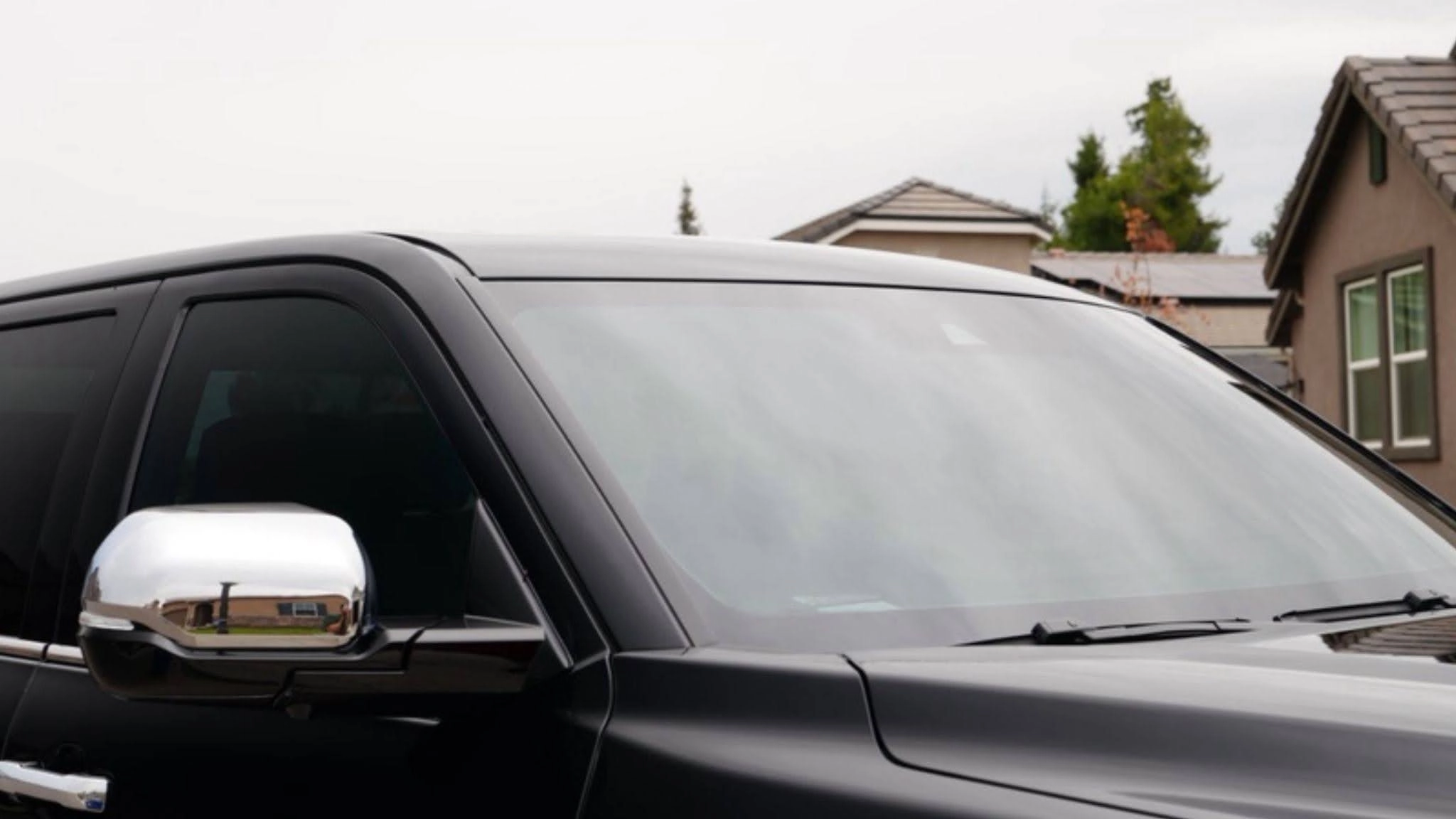
Most of the electronics people worry about, GPS antennas, factory telematics systems, toll transponders, and increasingly ADAS cameras, are clustered at or near the windshield rather than distributed across side and rear glass. That’s largely why side and rear window tint rarely causes any real-world signal issues, even with older film, while windshield tint is the area that actually warrants attention.
It also lines up with the law: California already restricts windshield tint to roughly the top four inches, which happens to keep the busiest electronics zone on most vehicles clear regardless of film type.
ADAS Cameras and Driver-Assist Systems
Newer vehicles increasingly rely on a forward-facing camera mounted behind the windshield to power lane-keep assist, forward collision warning, and automatic emergency braking. Standard side and rear window tint doesn’t affect these systems, since they depend entirely on the windshield’s clarity, not the tint level on the doors.
The real risk with ADAS-equipped vehicles is installation quality near the camera housing itself: dust, moisture, or film edges too close to the camera’s field of view can affect how it reads the road, independent of whether metallic film is involved at all. A careful installer keeps that zone completely clean and verifies lane-assist and collision-warning systems behave normally with a test drive after the job is done, rather than assuming everything’s fine.
Toll Transponders and Where They’re Mounted
Windshield-mounted transponders, like FasTrak, are the most common place signal issues actually show up, since even some higher-end films can affect reception depending on exact composition and mounting position. Proper transponder placement, following the toll agency’s own mounting guidance, matters as much as the film itself.
Dash Cams and Aftermarket Electronics
Dash cams and radar detectors mounted behind the windshield generally aren’t affected by side or rear tint, but windshield tint and mounting position both matter for how well they perform. Most installers recommend mounting these devices in the clear strip near the rearview mirror, both for legal visibility reasons and to keep them outside any tinted portion of the glass.
Aftermarket alarm systems and remote start units with window-mounted antennas are a less common but real consideration, particularly on older vehicles where the antenna wasn’t originally designed around a tint installation. Flagging any aftermarket electronics to your installer beforehand avoids finding out about a conflict after the fact.
Rear Defroster Lines: How Installers Work Around Them
Rear windows with built-in defroster lines require film to be applied without disrupting the electrical grid embedded in the glass. Professional installers route the film around or between the lines during a proper install, which is part of why a rushed or inexperienced job carries more risk of defroster damage than the tint itself does.
A defroster that stops working after a tint job is far more likely to be an installation issue, cutting too close to a line or applying pressure that damages the grid, than something inherent to tinting a rear window.
Verifying Compatibility Before a Full Install
For anyone specifically worried about a piece of equipment, whether that’s a toll transponder, a fleet GPS tracker, or an older alarm system, asking to test on a single window before committing to the full vehicle is a reasonable request. It’s a small extra step that removes the guesswork for anyone whose setup falls outside the typical case.
Shades & Shine can talk through film options based on what electronics matter most in your vehicle. Get a free tint quote and ask about compatibility for your specific setup.
FAQ
Does ceramic tint block GPS or Bluetooth?
Generally, no. Ceramic film is non-metallic, so it doesn’t interfere with GPS or Bluetooth signals the way older metalized films could.
Will my FasTrak or E-ZPass still work after tinting?
In most cases, yes, especially with non-metallic film and correct transponder mounting. Metallic tint is the more likely cause of any reception issues.
Does tint affect key fob range?
Non-metallic films typically have little to no effect on key fob signals. Metallic tint is the more likely cause if range noticeably drops after installation.
Does tint affect ADAS or lane-keep cameras?
Standard side and rear window tint generally doesn’t, since those systems rely on the windshield rather than the doors. Installation quality near the windshield camera housing matters more than tint type for ADAS-equipped vehicles.
Does tint interfere with a rear window defroster?
A properly installed film is applied around the defroster lines without disrupting them. Defroster problems after tinting are far more likely to point to installation quality than to tint itself.
Can I test film on one window before committing to the whole car?
Yes, and it’s a reasonable request for anyone with specific electronics concerns. A single-window test removes the guesswork before a full vehicle install.